efore Hurricane Irene smacked his tender tobacco plants sideways, David Parker was headed for a terrific crop, maybe his best in 32 years of farming.
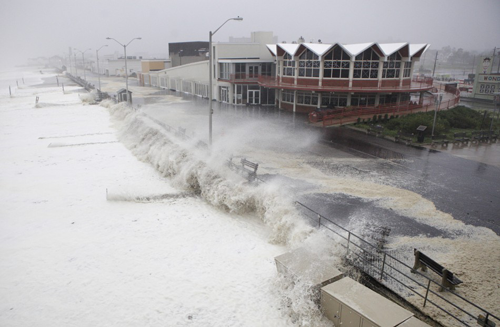
Hurricane Irene battered the East Coast with heavy winds.
“I’ve never had a year I didn’t make money farming, but I think this will be the one that gets us there,” he said Wednesday, driving up a dirt road between a beaten-down cotton field and a 17-acre patch of dejected-looking tobacco.
“Most of the counties I cover, pretty much any tobacco still in the field is going to be close to a 100 percent loss,” said Dianne Farrer, a regional agronomist for the state who works in more than a dozen eastern counties, including some of the state’s biggest tobacco producers.
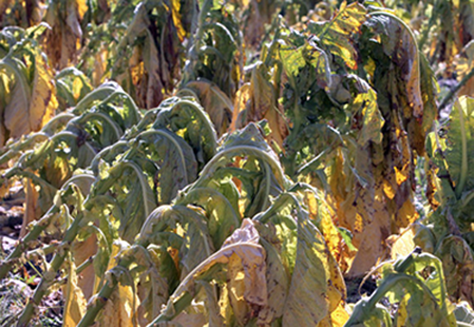
Tobacco leaves after Hurricane Irene attack
The green-gold tobacco leaves – which normally this time of year would be spread wide, waiting to be plucked, dried at a careful pace and taken to market – were hanging straight down, shriveled, with the stalks leaning the way that the wind had pushed them.
That’s what the state’s latest agricultural disaster looks like: wilted leaves, angled stalks, a tangle of cotton plants with fat bolls that had looked unusually promising but now might not open. Subtle stuff to everyone but the hundreds of farmers who, like Brown, now face what may be their worst losses ever.
“I’ve talked to several growers, and they’re just disheartened,” she said. “If it’s leaned over or knocked over, they can’t harvest mechanically, and if they don’t get in and harvest what’s left by hand, by the end of the week it will be lost.”

